
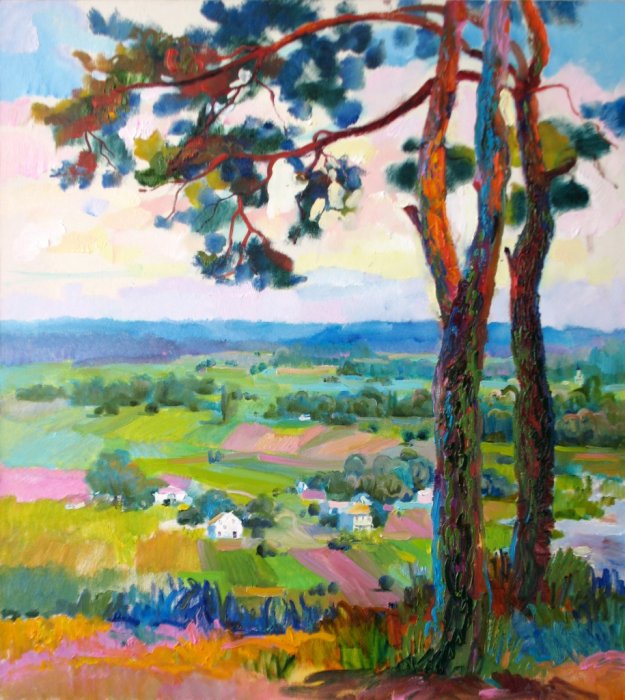
 Many people believe that one must start learning to draw from early childhood. Yet this is a mistaken belief. Adult students even have certain advantages over children: conscious motivation, a developed sense of taste, and critical thinking. That is why drawing courses for adults in Kyiv are becoming increasingly popular among people of different ages and professions.
The Ukrainian capital offers a wide variety of options for art education. Here, both traditional academic schools and modern creative spaces with experimental methods are available. The main thing is to find what corresponds to your goals and temperament.
Why Do Adults Choose Drawing Courses in Kyiv?
The capital of Ukraine has always been a city of artists and artistic traditions. It creates a special atmosphere that inspires creativity. Drawing courses for adults in Kyiv are popular for a reason: local studios combine professional teaching with the convenience of learning adapted to the busy schedules of people who are either working or committed to their families.
Modern individuals often – some almost constantly – find themselves under continuous stress, caused not only by the war but also by the intense rhythm of work, conflicts, household concerns, and the flow of information noise. Drawing becomes a kind of antithesis to this chaos. It calms, focuses attention, and allows one to “reset” psychologically. At the same time, valuable skills are developed: attentiveness, coordination, and aesthetic perception.
Of particular value are academic painting courses. They provide practical experience of art supported by a fundamental understanding of how colour works, how composition is built, and what techniques exist. This is not mere copying of samples, but genuine preparation for beginner artists so that they both know and understand how to create good paintings.
Students often choose painting courses for adults in Kyiv after realising the need for personal creative self-expression. Years devoted to career growth and family responsibilities finally open up the opportunity to engage in what they once dreamed of in their youth, or what they came to appreciate in maturity. Art studios in the capital offer flexible class schedules, making it easy to combine learning with everyday life.
Popular Techniques in Painting Courses for Adults in Kyiv
Watercolour – The Art of Subtlety
Watercolour painting captivates with its refinement. Transparent layers of paint create a special lightness and airiness of the image. Colour transitions turn out soft and natural. Landscapes, floral painting, and architectural sketches are particularly successful in this technique.
Working with watercolour is not easy – it requires confidence and precision. Mistakes are hard to correct, which is why every brushstroke must be deliberate. Yet the result impresses with its beauty and delicacy.
Oil Painting – Timeless Classic
Oil paints are often called royal for a reason. One of the explanations is that they offer the broadest opportunities for self-expression. Their thick texture allows the artist to work both with thin transparent layers and with dense, textured strokes. Colours appear rich and profound.
The main advantage of oils is their slow drying. An artist may spend hours refining details, altering and improving the work. This technique is perfectly suited for portraits and complex compositions where accuracy of depiction is essential.
Oil paints enable the use of various artistic approaches: glazing for creating depth effects, impasto for conveying texture, and sfumato for soft transitions. Oil painting courses in Kyiv are especially popular among those eager to master the classical techniques of the great masters.
Working with oils demands an understanding of specific materials: solvents, mediums, and varnishes. Professional teachers instruct not only in technical methods, but also in the proper care of tools, preservation of artworks, and creating the optimal conditions for creativity.
Gouache and Acrylic – Versatile Options
Gouache occupies an intermediate place between watercolour and oil. This paint is opaque yet water-soluble. Mistakes can be corrected with ease: dark areas may be covered with light ones, which makes it an ideal choice for beginners.
Acrylic paints dry quickly and are very bright. They can be used transparently, like watercolour, or thickly, like oils. Contemporary artists often prefer acrylic precisely for its practicality and durability.
The Structure of Learning in Painting Courses
Professional courses always follow a clear structure. The programme is designed for several months of regular classes. Such an approach allows students to gradually master the material and consolidate new skills.
At the beginning, students study colour theory and the fundamentals of composition. They learn how to mix paints, what warm and cool tones are, and how to create harmonious combinations. The first practical assignments are simple still lifes with a few objects.
Gradually, the tasks become more complex. New techniques and more intricate themes are introduced. Students learn perspective, practise conveying volume, and work with a variety of textures. The main goal is to develop artistic vision – to teach them to “see like an artist”.
Academic painting courses in Kyiv may, for instance, include fifteen carefully structured lessons, each devoted to a specific topic – from still lifes in warm and cool palettes to complex landscapes with reflections in water. Such a systematic approach ensures consistent learning without gaps in skills or knowledge.
Advantages of Group Classes in an Art Studio
Studying in a group has its benefits. Communication with like-minded people, the exchange of experience, and a friendly atmosphere make the classes more engaging. One can observe different approaches to completing tasks, which broadens the understanding of techniques and personal possibilities.
The artist-teacher works with each student individually while also keeping in mind the general pace of the group. This instils discipline and motivates learners to move at an optimal rhythm. Collective discussions of works encourage the development of critical thinking, which helps artists improve and set new goals.
Drawing Courses and the Practical Value of Artistic Skills
Drawing develops not only creative abilities. It trains attentiveness, observation, focus on detail, and the ability to analyse forms and colours. These qualities prove useful in many professions and everyday situations.
- Working with different tools improves fine motor skills and coordination of movements.
- Compositional skills help to organise the surrounding space more effectively. Many people, after completing courses, begin to see architecture, nature, and interior design in a new way.
- The technical aspects of painting demand patience and accuracy, qualities which often transfer into other areas of life.
- Drawing is also an excellent way to relieve stress and restore emotional balance. For many students, this factor of learning painting is of particular importance.
- Professional drawing courses for adults in Kyiv frequently open new opportunities for career growth. Artistic skills are increasingly relevant in design, advertising, education, and applied decorative arts. Some graduates even change their profession altogether, discovering a true vocation in creativity.
The Psychological Impact of Creativity
The process of drawing works as a natural meditation. Concentration on the task helps to disconnect from problems and worries. Muscles relax, breathing steadies, and stress levels decrease.
Creativity provides the opportunity to express emotions that are difficult to put into words. Colours and forms become a kind of language of feelings. This is especially valuable for those accustomed to keeping their emotions inside.
Every completed work is a small victory. It raises self-esteem and provides a sense of achievement. Gradual improvement of skills motivates students to continue learning and to keep experimenting.
Organization of Painting Classes: Format and Duration
Most studios offer sessions once a week lasting 2–3 hours. Such a schedule is convenient for people who work, as it can be combined with daily responsibilities. The duration is sufficient for productive work yet not exhausting.
If a course consists of around fifteen such sessions, both time and practice are enough to study and consolidate the basics systematically. Over the course, essential skills are formed, and students gain confidence in working with the materials. They also manage to create a series of full-fledged works.
Professional studios provide students with everything they need – paints, brushes, paper, and easels. Beginners do not have to purchase expensive materials immediately; instead, they can first try different techniques and define their preferences.
Choosing a Technique for Beginners
For those without artistic experience, it is often difficult to understand where to start. Good courses allow students to familiarise themselves with all the main techniques, which eventually helps them find the most suitable one.
Watercolour attracts with its lightness and quick results, but it demands confidence. Gouache is more “forgiving” and is well suited for studying colour theory. Acrylic is versatile, enabling experiments with different effects. Oil painting is considered the most academic technique, offering the broadest possibilities for artistic expression, though it requires more patience due to slow drying and the specifics of working with solvents.
Experienced teachers recommend starting with gouache or acrylic, then gradually moving on to more complex techniques. This sequence allows beginners to form basic skills in colour and composition without being overloaded by technical complexities. Once the foundations are mastered, students can experiment with watercolour and oil painting, which demand deeper mastery and understanding of the material.
The Art of Teaching and an Individual Approach
One of the main goals of learning is to achieve a vision of the world as perceived by an artist. This means noticing subtle nuances of colour, understanding how light influences the perception of shape and hue, and taking into account reflections and shadows.
Regular practice from life enhances observation. Students learn to analyse what they see, identify the essential, and generalise details. Gradually, they gain an understanding of the principles of composition.
Working on different subjects – still lifes, landscapes, sketches – forms artistic thinking. These skills eventually become intuitive, allowing one to focus on conveying mood and emotion.
Experienced teachers of painting courses understand the particularities of working with beginner artists of different ages. They consider the student’s varying levels of preparation, personal goals, and pace of learning. Such a personalised approach enables everyone to reveal their creative potential regardless of their starting skills.
Professional artists leading painting courses for adults in Kyiv do more than teach techniques – they help to form artistic thinking, refine aesthetic taste, and overcome creative blocks. The support, guidance, and constructive criticism offered by such mentors create the optimum conditions for artistic growth.
Communication and New Acquaintances in Drawing Courses
Drawing courses often become a place for making meaningful connections. People with similar interests easily find common ground. The creative atmosphere encourages open communication and the building of lasting friendships.
Many groups organise outdoor plein air sessions, visits to exhibitions, and creative evenings. Discussions of works and the exchange of experience enrich the learning process and help beginners overcome common difficulties more quickly.
Participation in group projects and joint exhibitions adds an element of public presentation. Students find encouragement to take their creativity more seriously, overcome the fear of showing their works to others, and “open themselves to the world”.
Prospects for Development After the Basic Course
Having mastered the fundamentals, one can continue to develop in different directions. Specialised masterclasses make it possible to deepen knowledge in specific techniques or genres. Portrait, landscape, abstraction – each direction has its own subtleties.
Some graduates move on to serious artistic work, taking part in exhibitions and competitions. Others apply their skills commercially – mural painting, creating illustrations, portraits, or sketches.
Artistic vision is valuable in many fields. Designers, architects, decorators – all of them rely on the principles of composition and colour theory in their work.
Many studios offer extended learning programmes after the completion of the basic course. These may include regular weekly group sessions, thematic workshops focused on particular techniques, plein air trips for working in nature, or even long-term projects devoted to creating a personal exhibition. Such approaches enable students to gradually move from learning to professional artistry.
How to Choose the Best Drawing Courses for Adults in Kyiv?
Of particular importance is the qualification of the artist who teaches the course, as well as his or her experience of working with an adult audience. A good specialist and master does not merely possess technique, but is also able to explain, motivate, and find an approach to each student.
Quality painting courses for adults always feature a structured programme. It is worth ensuring that it includes familiarisation with different techniques and practical instruction on how best to use them. A comprehensive approach enables everyone to discover their own style and to understand the nuances of creativity.
Practical aspects also matter: the location of the studio, the convenience of the timetable, and the provision of materials. All of these factors influence how regularly the classes are attended and, consequently, the results of the learning process.
Kyiv as an Environment for Artistic Development
The cultural life of the capital creates a special atmosphere for studying art. Museums, galleries, and exhibitions provide opportunities to engage regularly with the works of professional artists. Visiting exhibitions becomes an inseparable part of artistic education, allowing students to explore the techniques of masters directly through original works.
The architecture of Kyiv, together with its parks and outskirts, offers excellent material for plein air painting. Working in nature brings variety into the learning process and provides the chance to apply acquired skills in practice.
Creative events – festivals, meetings with artists, masterclasses – complement the core training. Such a rich programme makes the process of mastering painting exciting and multifaceted. Regular art events in the capital also create opportunities for professional networking and discovering new trends in art.
Drawing courses for adults in Kyiv open the door to the world of art regardless of age or prior experience. This is an investment not only in new skills, but also in personal growth, broadening of outlook, and the chance to look at ordinary things with fresh eyes. The world of painting is always open to those who aspire to create and to grow. May creativity accompany you every day, and may each day become the best time for new beginnings.


