
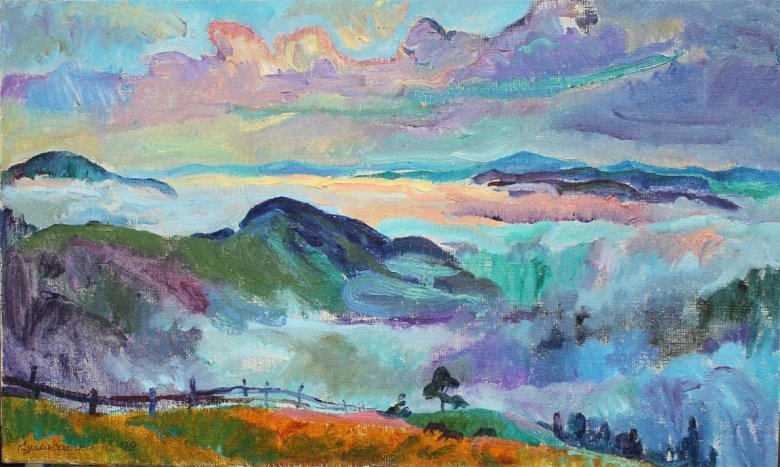
 In today’s art world, painting outdoors – plein air – has long since stopped being just a romantic adventure for beginners. For the professional artist, working outdoors is a strategic tool: a way to keep your eye trained, refine your mastery of color and light, and seek out lively sources of inspiration for gallery shows or commissions.
- For many artists, plein air painting becomes a true laboratory of new experiences; outside the walls of the studio, the essence of color harmony, the role of light and shadow, temperature contrasts, and even the influence of weather on your narrative become truly clear.
- Professionals note that regular outdoor practice helps shed schematic habits in landscapes and develops the skill of “seeing the essential”.
- Experts recommend venturing into the field even when preparing for large-scale works – sketches created outdoors often serve as the foundation for future masterpieces in the studio.
What Materials Should an Artist Choose for Plein Air?
The materials a professional artist selects depend on their vision, the weather, and even the surrounding environment. Oil paint remains a favorite for those willing to carry an easel and aren’t afraid of a few stains. Today’s oil paints are easy to transport, and special palettes that attach to easels or tripods allow you to organize your workspace in any setting.
If you need speed and mobility, watercolor or gouache are great for capturing the softness of air and the subtle color shifts of sky, water, and foliage. Many artists combine techniques – beginning with a graphite or sanguine sketch to define light and shadow and adding color afterward. Acrylics also have big advantages: they dry quickly, letting you pack up your painting almost immediately.
Modern Solutions
Contemporary graphics offer exciting new tools: more and more artists use tablets and digital styluses for sketching outdoors, then return to canvas in the studio, bringing their color studies and compositions. But even here, a true professional doesn’t rely on “automation” – they train themselves not to copy blindly but to analyze a scene’s composition, flow of light, perspective, and surface texture.
How Can You Capture the Moment During Plein Air?
Experienced landscape artists always strive to “catch the moment”. Nature changes minute by minute: clouds move, the shapes of shadows shift, and light breaks differently through the leaves.
The pros advise coming to a plein air session with a clear goal: capture the movement, highlight a characteristic feature of the place or the state of nature, rather than meticulously copying every branch. For this, it helps to practice the technique of “from general to detail”: start with large color shapes, gradually refine the forms, and only add accents at the very end.
Organizing Your Plein Air Practice
Most artists aim to finish their landscape in a single session – typically within two or three hours – making the most of natural light and quickly responding to changes in color and mood. This pace is essential for preserving the atmosphere’s integrity and the freshness of your first impression.
Usually, the artist defines the main accents at the start, then develops details, moving from large objects to smaller elements. While some artists paint series of studies, returning to the same spot at different times of day, the key skill for plein air is the ability to focus and work productively “here and now”, adapting to specific conditions and your own style.
For those new to outdoor painting, it’s vital to train not only your eye but your logistics: make a checklist of what to bring, plan for different times of day if your painting will take more than one session, check the weather in advance, and remember to pack snacks and water.
Think Broadly
The historical context of plein air painting is more significant for landscape artists than many realize. Back in the 19th century, painting outdoors spurred entire artistic revolutions: impressionists, for example, revealed a new language of color and harmony by working “on the spot”.
Today’s artists rethink and explore this legacy: they develop their own unique methods, work in series rather than as isolated studies, organize international plein air residencies that become both growth platforms and spaces for sharing experience. Current trends include blending traditional and digital tools in the field, creating short video diaries of the painting process, using natural pigments, and drawing inspiration from ecology and sustainability concepts.
Recommendations for Those Learning to Paint Outdoors
- Work with a “quick hand” – this not only sharpens your technique, but builds creative flexibility.
- Don’t be afraid to change your subject during a session; experiment with color and shape.
- Keep even unsuccessful studies: they often suggest surprising compositional ideas for future paintings.
- Use your palette to the fullest, mixing colors on the spot, and get comfortable working in series.
It’s in the open air, alongside living light, that an artist returns again and again to basic truths: to see, to feel, to improvise. For a professional landscape painter, plein air is more than mere practice – it’s a journey toward a unique personal language in painting, a way to experience time, light, and the subtle harmony of nature in the present moment.


