
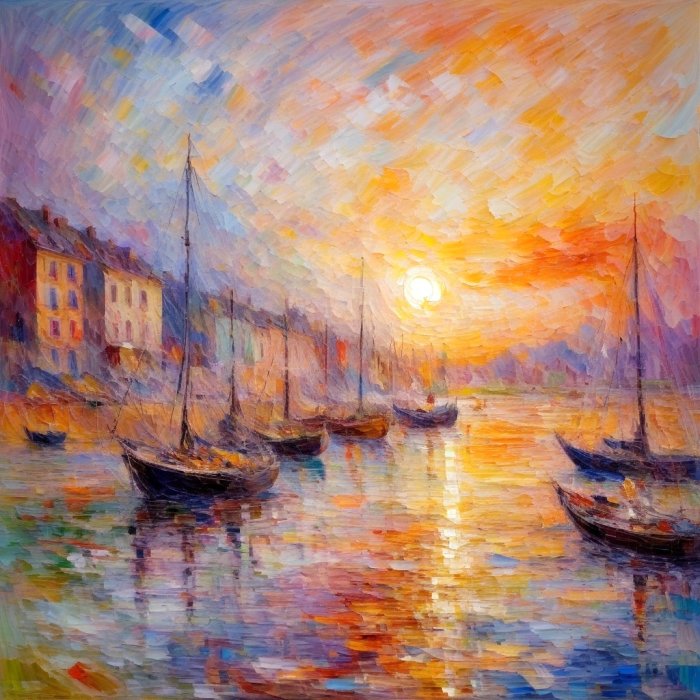
 Impressionism is a painting technique focused on capturing fleeting moments and impressions. This style differs from traditional painting as Impressionists emphasize light, color, and atmosphere rather than details and sharp contours. What are the key elements of Claude Monet's style, and what practical advice can be given to artists who wish to paint in this way?
Key Features of Impressionism
- Quick, Short Brushstrokes
Impressionist artists aim to capture momentary impressions, using free and energetic brush movements. This technique creates a sense of movement and dynamism, bringing the painting to life. Each brushstroke conveys certain emotions and thoughts of the artist, and instead of focusing on details, Impressionists strive to capture the overall impression of the moment.
- Bright, Pure Colors
Impressionists avoid mixing colors on the palette, applying them directly onto the canvas to achieve maximum light and color effects. They believe that colors can evoke emotions and impressions, so they use a palette that conveys brightness and vibrancy. This technique allows the viewer to feel the energy and atmosphere of the moment just by looking at the painting.
- Light and Shadow
Instead of using black to create shadows, Impressionists combine colors to achieve natural shades. This helps them convey the effect of light, which changes depending on the time of day and weather conditions. Impressionists view shadow not as the mere absence of light, but as something that has its own tones interacting with the environment. This approach adds depth and volume to their work.
- Atmospheric Representation
Impressionists aim to depict not just what they see, but also what they feel. They focus on the air, atmosphere, and emotions of the moment. As a result, their paintings become not just visual depictions but emotional experiences, capable of transporting the viewer to a specific time and place. Every painting tells a story, immersing the viewer in the artist's world.
How to Start Painting in Monet’s Style?
To dive into the Impressionist technique, particularly Claude Monet's style, it's important to understand that this approach prioritizes not technical perfection but the ability to convey personal emotions and impressions. Before starting, prepare yourself to view nature and your surroundings through the lens of light and color. Here are some tips to help you take your first steps in this style and better understand how Monet worked.
1. Choosing a Subject
Select simple natural scenes like gardens, ponds, or flowers. Focus on moments that inspire you, paying attention to how light changes throughout the day. It's essential to feel what draws you to the subject, whether it's its color, shape, or perhaps the reflections of light. When choosing a subject, remember that it should be emotionally significant to you, as this will help you honestly convey your impressions on the canvas.
2. Color Palette
Use bright, pure colors applied directly to the canvas. For example, instead of mixing green for grass, use neighboring colors to create the illusion of mixed color. Key colors in your palette might include:
- Ultramarine: for the sky and water, adding depth and emotion;
- Cadmium Yellow: for sunlight, creating a sense of warmth and joy;
- Veronese Green: for leaves, giving a natural and fresh look;
- Cobalt Blue: for shadows, helping create contrast and volume.
Remember, colors can interact with each other, so experiment with combinations and shades to achieve your desired effect.
3. Paint Application Technique
Monet used quick, bold brushstrokes. Choose the type of stroke depending on what you're depicting:
- Large strokes for skies, helping to create space and a sense of height;
- Short strokes for grass, adding texture and realism;
- Circular strokes for water, creating a sense of movement and dynamism.
This texture adds vibrancy to your work. Try different techniques to find what best suits your style.
4. Painting Outdoors (En Plein Air)
Paint in nature to capture changes in light and atmosphere. Try to complete the painting in one session to capture the unique moment. This will help you study how the environment changes and create more authentic works. The key is not to focus on small details but to convey the overall impression.
Pay attention to perceptions that may fade over time: how light falls on objects, how certain colors dominate at certain moments. Working outdoors allows you to actively interact with nature, which will influence your creativity.
5. Create Series of Paintings
Try painting several works from the same location at different times of day to understand how light and color change. This will allow you to study the dynamics and nuances that will make your work feel more alive. Observe how the same scene can appear entirely different under various lighting conditions.
Exploring different variations of one subject will help you better understand how colors and light can alter the emotional content of your work. By working on a series, you can discover your own style and voice as an artist.
6. Use Sketches and Photos
While Monet worked mostly outdoors, you can use photographs as a source of inspiration. However, try not to copy them literally—add your own impressions and emotions. Create sketches or drawings based on photos to understand which details are most important to you.
Photographs can help you capture special moments that you can later bring to life in your paintings. However, remember that your goal is to create your interpretation of the moment, reflecting your personal impressions.
Conclusion
Painting in Claude Monet's style is an exciting process that allows you to experiment with color, light, and form. Focus on the overall impression and the feeling of the moment rather than the details. Be bold in bringing your ideas and emotions into your art! Your painting is your unique expression, and you have the freedom to create it as you feel. Each brushstroke is a step toward self-expression, so enjoy the process and the beauty of painting.
To further develop your artistic potential and painting techniques, consider enrolling in academic painting courses or taking individual classes.


